


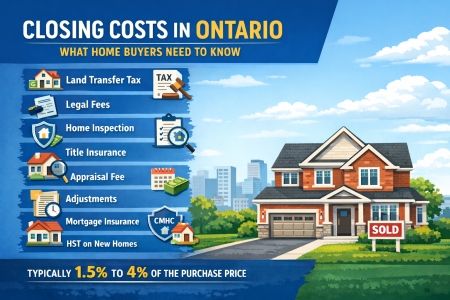
If you’re planning to buy a home, understanding closing costs in Ontario is essential. Many buyers focus on saving for a down payment—but closing costs can add thousands of dollars to your total upfront expenses.
In this guide, we’ll break down the typical closing costs in Ontario, how much you should budget, and what first-time home buyers need to know before closing day.
How Much Are Closing Costs in Ontario?
Closing costs in Ontario typically range from 1.5% to 4% of the home’s purchase price.
Example:
- $500,000 home → $7,500 to $20,000 in closing costs
- $700,000 home → $10,500 to $28,000 in closing costs
These costs are paid in addition to your down payment and are due on closing day.
What Is Included in Closing Costs in Ontario?
Here’s a breakdown of the most common Ontario closing costs for buyers:
Land Transfer Tax (LTT)
The Ontario Land Transfer Tax is usually the largest expense.
- Based on a tiered percentage of the purchase price
- Can range from 0.5% to 2.5%+
- First-time home buyers may qualify for a rebate of up to $4,000
Legal Fees and Disbursements
You’ll need a real estate lawyer to finalize your purchase.
- Typical cost: $1,000 to $2,500
- Covers title search, registration, and closing paperwork
Title Insurance
Title insurance protects you against ownership disputes, fraud, or errors in public records.
- One-time cost (often $250–$500)
- Usually arranged by your lawyer
Home Inspection Fee
While optional, a home inspection is highly recommended.
- Typical cost: $300 to $600
- Helps identify structural or safety issues before closing
Appraisal Fee
Your lender may require an appraisal to confirm the home’s value.
- Typical cost: $300 to $500
Adjustments (Prepaid Costs)
Adjustments reimburse the seller for prepaid expenses like:
- Property taxes
- Utility bills
- Condo fees
These vary depending on the closing date and property.
Mortgage Default Insurance (If Less Than 20% Down)
If your down payment is under 20%:
- Mortgage insurance is required (through providers like CMHC)
- The premium is added to your mortgage
- Sales tax on the premium must be paid at closing
Additional Closing Costs to Budget For
Beyond the main expenses, buyers should also plan for:
- Moving costs
- Home insurance (required before closing)
- Utility setup fees
- Condo status certificate fees (if applicable)
Closing Costs for First-Time Home Buyers in Ontario
If you’re a first-time buyer, you may be eligible for savings, including:
- Land Transfer Tax rebate (up to $4,000)
- First-Time Home Buyer Incentives (if applicable)
These programs can significantly reduce your upfront costs.
How to Estimate Your Closing Costs
A simple rule of thumb:
- Budget at least 2% to 3% of the purchase price to stay safe.
For a more accurate estimate:
- Speak with your realtor or mortgage broker
- Request a detailed cost breakdown early in the process
Final Thoughts: Be Prepared for Closing Day
Understanding closing costs in Ontario helps you avoid surprises and ensures a smooth home-buying experience. While these costs typically range from 1.5% to 4%, planning ahead is key.
Before you make an offer, make sure you:
- Have enough cash set aside
- Understand each cost involved
- Work with trusted professionals
FAQs About Closing Costs in Ontario
What are closing costs in Ontario?
Closing costs are the legal, administrative, and tax-related expenses required to complete a home purchase.
How much should I save for closing costs in Ontario?
Most buyers should budget 1.5% to 4% of the purchase price.
Do first-time buyers pay closing costs in Ontario?
Yes—but they may qualify for rebates like the Land Transfer Tax refund.


